
Understanding Your Trauma Responses
A simple, clear guide to understanding your nervous system, with practical tools to help you return to safety and calm.
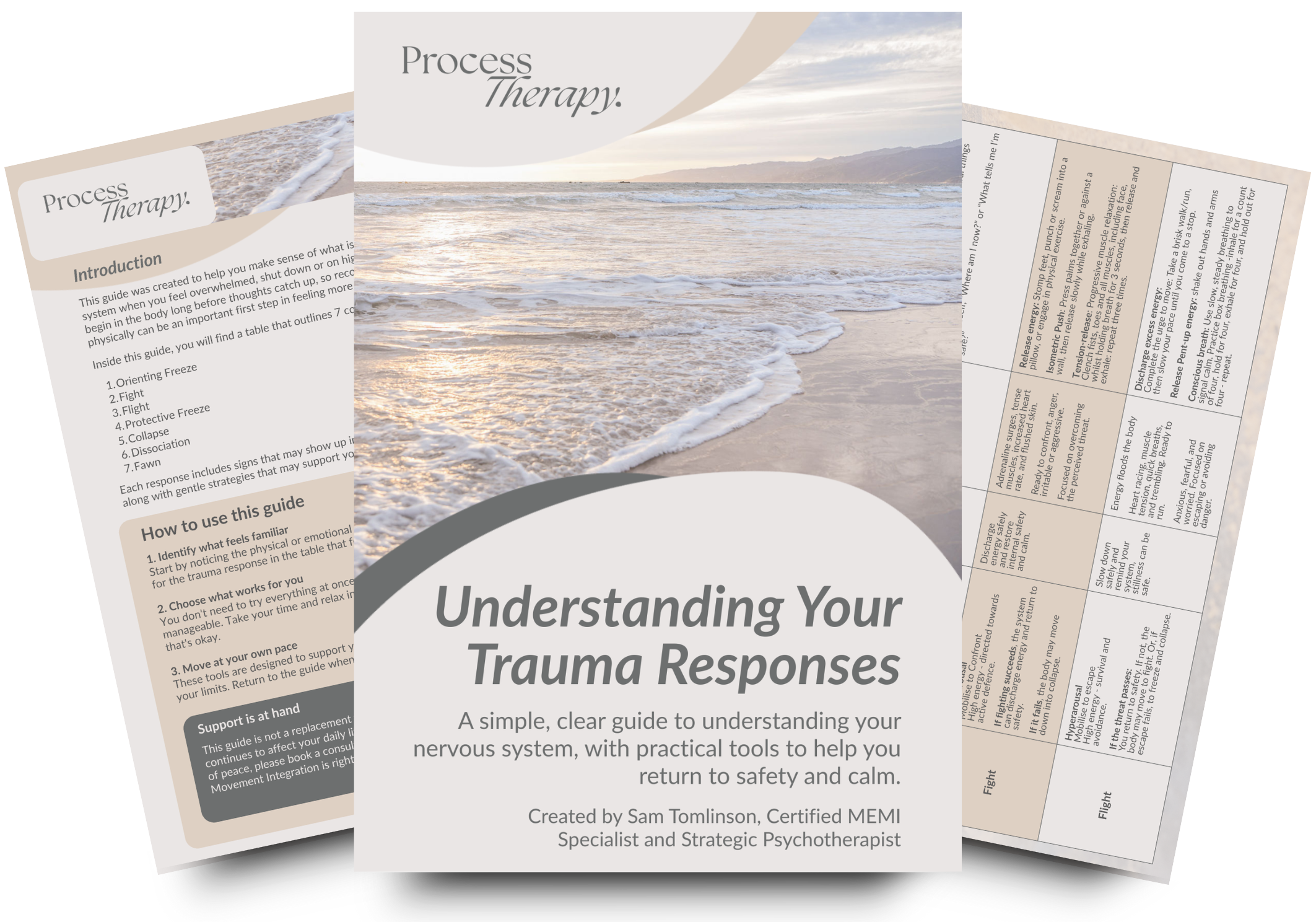
If your life is being affected by the aftereffects of a painful memory or unsettling experience, this guide is designed to help.
If you often feel on edge, notice intrusive memories or flashbacks, or experience strong physical reactions - a racing heart, shortness of breath, sudden tension - especially when something reminds you of the past, it’s likely your nervous system is trying to protect you from what it still perceives as a threat.
Trauma responses happen automatically and without conscious choice. The body senses danger long before the mind can assess what’s happening, and it reacts accordingly.
This guide helps you understand those reactions, what they’re trying to achieve, and how you can support yourself in the moment rather than feeling overwhelmed or powerless.
We explore 7 common trauma responses and provide small, practical tools you can use in real time.
Try simple tools to support your nervous system
Each response includes gentle techniques you can use straight away - simple, grounding strategies that help your system rest, reset, and settle.
Move at a pace that feels safe
You’ll find a couple of options for each response, so you can choose what feels manageable for you. These tools are not a replacement for trauma therapy; they’re supportive techniques to help you find relief in the moment.
Hi there, I’m Sam.
I’m the founder of Process Therapy and a trauma therapist
With experience supporting clients through unresolved trauma, addiction and co-occurring mental health concerns, I’ve seen how unresolved trauma can quietly shape a person’s ability to heal. Symptoms often linger beneath the surface and resurface in moments that feel completely out of your control.
For many people, this shows up as physical tension, heightened anxiety, intrusive thoughts, or a growing dependence on alcohol or other substances just to cope.
I utilise Multichannel Eye Movement Integration (MEMI) to help reprocess persistent traumatic memories safely and effectively. MEMI works directly with your sensory-based memory system. Instead of asking you to retell the experience, MEMI focuses on how the memory shows up in your body today.
You don’t need to unpack your past to create meaningful change. If previous therapy hasn’t brought the relief you hoped for and you’re ready to take back control of your life, then you have landed in the right place.

A difficult past doesn’t have to define your future.
With the right support, your whole being can return to a place of calm and safety.
Download your free guide and take the first step toward feeling more present, calm and in control.